



Our View on Coaching
Coaching is Personal
In the real world, senior-level leaders don’t become their best by emulating a model described in a book or chatting with a coach picked from an app.
As a leader moves up in an organization, successful development requires working on what makes that particular leader effective in the context in which they must lead, a process too specific for off-the-shelf curriculum or online content libraries.
The idiosyncratic nature of this development is perfect for the bespoke, flexible practice of one-on-one coaching with a highly-credible coach who has been hand-chosen by the leader for personal chemistry, specific coaching objectives, organizational culture, location, and industry. Leader and coach engage in a close collaboration, together formulating strategies for practicing new behaviors that allow the leader to move measurably closer to his or her particular goals. The quality and size of WJM’s coaching Faculty offer maximum adaptability in closely complementing any leader on their developmental journey.
Coaching is About Behavior Change
Changing behavior is hard, even with the help of a skilled coach.
Ongoing advances in neuroscience, psychology, and other fields inform our understanding of how we learn, break bad habits, adopt better ones and make positive change last. As our understanding evolves, WJM’s coaching evolves too. We utilize a rational and data-driven approach to coaching that brings state-of-the-art behavior-change principles into actual practice. We deliver results observable not only by the leaders we coach, but also by the organizations that depend on them.
Coaching is Systemic
Coaching must deliver value not only to the leader but also to their team, other stakeholders and the organization at large.
WJM delivers coaching systemically by:
- Actively involving the manager, HR and other key stakeholders throughout the engagement.
- Shadowing the leader to observe the system they work in.
- Supporting each coach with Supervision to help maintain a systemic view.
- Providing easy access to real-time information about each engagement to HR/Talent Management.
- Measuring results via positive change as observed by others.
- Bringing together coaches at an organization to share common development gaps, cultural themes, and other critical information.
Executive Coaching Services
Coaching at 3 Levels:
Executive Coaching
WJM’s Executive Coaching is an in-depth, one-on-one process between a current or future senior executive and his or her hand-picked coach, consisting of highly personalized developmental discussions conducted in-person or by phone/video conference.
Unlike large scale, virtual “coaching” platforms proliferating the market (comprised of online readings or learning modules, punctuated by short accountability “check ins” by a trainer/coach), this high-touch service is designed for a company’s most valued leaders, for whom cutting corners is not an option.

At the heart of our approach lies a relationship of trust, mutual respect and honest feedback between leader and coach. The WJM Coach creates a safe and supportive environment where positive shifts can happen. Through collaboration, data gathering, and self-reflection, the coach and leader identify and achieve performance goals such as:
- Enhancing leadership presence and communications
- Successfully transitioning (promotions, lateral moves, international assignments)
- Improving interpersonal relationships, emotional intelligence
- Setting and communicating a strategic vision
- Developing, motivating and aligning team members
- Leading change
- Balancing work and life
With over 800 of the most rigorously selected coaches in 44 countries, we are surgical in matching each executive with the best fit, complementing the level, personality, developmental needs, local culture, personal background, and language of the leader.
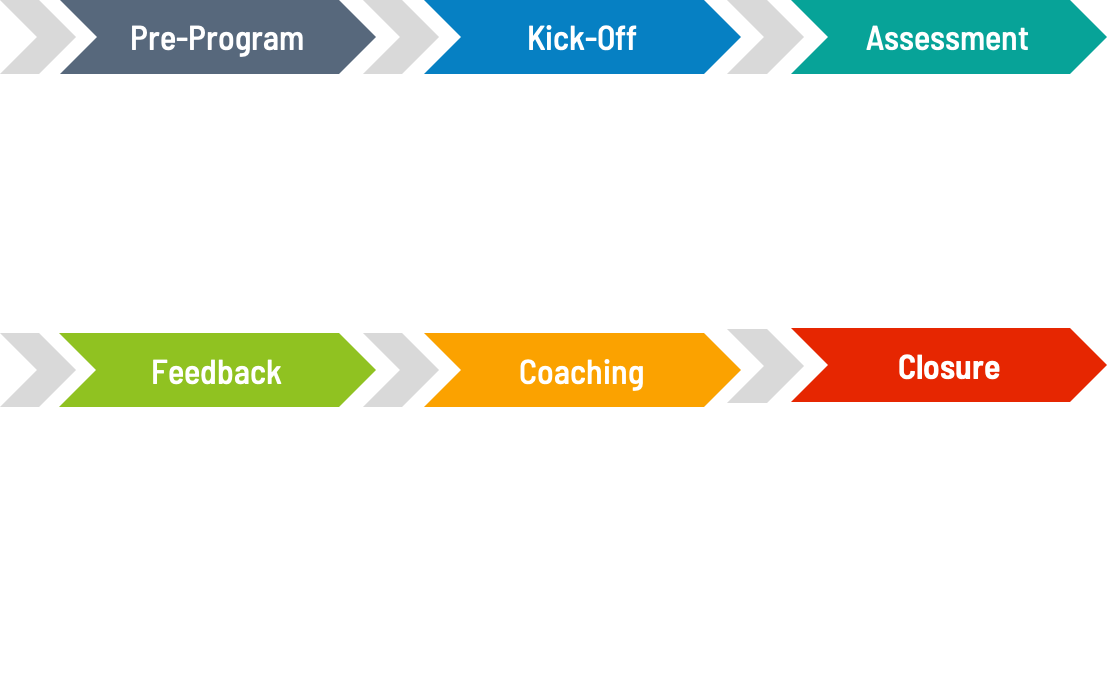
While WJM’s executive coaching services are entirely unique to the individual executive, the following describes the basic flow:
Shadowing
If appropriate, the WJM Coach may “shadow” the leader, observing his/her work environment, interactions with co-workers, etc. This type of observational coaching allows for deeper insight into the executive’s leadership and communication style, work context and how he/she is perceived by others, providing opportunities for “real time” feedback. Traditionally conducted in person, shadowing can also occur virtually, with the coach observing online group interactions.
Client Success
WJM provides executive coaching services for our top talent across the globe. The caliber of the coaches, the business impact of the services, and the critical insights and observations they provide about our leaders and businesses — have all exceeded our expectations. We don’t view WJM as a coaching vendor, but as a strategic partner.
VICE PRESIDENT, GLOBAL TALENT, LEADING LUXURY BEAUTY COMPANY
On-Boarding
Coaching that increases the success rate of newly hired or promoted executives
According to studies, more than 50% of senior executives entering a new position are terminated, resign or perform significantly below expectations during the first 18 months. WJM’s On-Board Coaching increases the return on the major investment companies make in their people. Our on-boarding is designed to reduce risks and costs by intervening to identify and address potential challenges faced by new executives, and to increase their productivity by accelerating and supporting successful assimilation.
On-Board Coaching is for:
- New hires
- Promotions
- Geographic re-locations
- Changing business situations
WJM’s On-Board Coaching is custom designed for the individual executive and organization. Engagements typically include a robust upfront assessment and three months of coaching, along with an optional Facilitated Team Assimilation Meeting.
On-Board Coaching provides the new leader with critical strategies for:
- Learning about the organization, including its culture and politics
- Understanding expectations of the role
- Developing effective communication approaches
- Gaining insights into business unit processes and practices
- Effective knowledge transfer
- Recognizing common pitfalls and developing action plans to avoid or mitigate these risks
- Developing high quality relationships with management, peers and subordinates
- Establishing targets for “early wins”
Client Success
WJM’s On-board Coaching service was extremely helpful to me as I joined Ethicon’s head office in a new position, in a new country, with a different language. Of course, expectations of my performance were extremely high. My WJM Coach helped me in identifying my key stakeholders and in building relationships with them. She was an excellent sounding board and intermediary for me. The meetings we had were extremely effective and impactful. My Coach also helped me navigate through some organizational alignment issues that I encountered.
FELIX GUIMOYE, Director of Worldwide Marketing - Wound Closure, Ethicon, Inc.
High-Impact Coaching
Today’s rapidly evolving environment sometimes calls for “just‑in‑time” development
Occasionally a more intensive executive coaching intervention is needed in order to assist an executive in quickly adjusting behavior to accommodate a promotion or a shift in role, culture or strategy. These situations may include:
- A high-value executive who requires immediate behavior change and/or demonstration of different strengths
- A need to quickly fill gaps in succession planning/staffing efforts
- Recruitment costs that are too high vs. internal promotion
- New leadership competencies required as part of a significant organizational change initiative
WJM’s High-Impact Coaching delivers positive behavior change and increased effectiveness within six weeks
WJM’s High-Impact Coaching offers a concentrated approach to development, delivered individually and “just-in-time” to strengthen under-developed skills or address critical deficiencies in current performance in a very time-sensitive manner. High-Impact Coaching is designed for critical situations where an executive is looking to change a core behavior over a short period of time, and to sustain the change over the long term.
A concentrated approach to development involving fast and deep emersion follow by “field testing” of learned skills
High-Impact Coaching involves an intensive offsite experience with the client and two highly skilled WJM Executive Coaches. Various assessment instruments, 360° feedback, role playing and scenario planning are used to dramatically increase the executive’s self-awareness and rapidly empower him or her to enact the changes desired by the executive and the sponsoring organization. Following the offsite, the executive receives ongoing coaching for several months to sustain gains, continue new behaviors and develop additional skills.
Client Success
My primary reason for participating in WJM’s High Impact Coaching was to rapidly improve my ability to deal with difficult customers both internally and externally under very challenging circumstances. My way of responding to frustrating conflicts with others was impeding critical progress on a large and high profile project that I was involved with. The High Impact Coaching Process provided both a much needed fast start to my development as a leader, as well as a depth of self-awareness and an ability to manage myself in difficult circumstances that has made all the difference in my success as a senior member of the project team.
SENIOR SCIENTIST, Major U.S. Government Contractor
C-Suite Advisorship
Helping leaders lead during turbulent times
Some 60% of today’s Fortune 500 CEOs have held their jobs for six years or less. One significant contributor to senior leader failure is that CEOs, Presidents and other top officers often have few individuals with whom they can openly discuss organizational concerns. These individuals lament the lack of “agenda-free” confidants available on the Board or within the management team given the inherent nature of boss/subordinate relationships.
WJM Advisorship™ program provides a powerful solution to the isolation felt by CEOs and other senior management.

How does The Advisorship™ work?
WJM Associates has identified a cadre of individuals with high-level corporate and/or board experience who are available to serve as trusted, objective, pragmatic and supportive confidants to corporate leaders.
The Advisorship™ differs from what is typically offered as “executive coaching” in that it pairs clients with peers who themselves have had the many years of high-level management and direct P&L experience necessary to truly empathize with and advise top executives. These individuals can deliver objective and candid feedback and recommendations on an individual’s leadership capabilities. They become a sounding board, and a trusted advocate who will provide advice from a unique perspective of having “been there” in a similar role. In effect, a mutual teaching/learning dynamic is created. The Advisorship™ can be implemented for six- or twelve-month time frames.
WJM also offers The Advisorhip™ On-boarding program, a shorter (three months), but more intense program focused on addressing the challenges faced by the newly hired or appointed senior executive. Expert consultation is provided with regards to assimilating into the new culture, building successful partnerships with Board members, ELT team members and other key stakeholders, establishing a new direction and vision, identifying potential pitfalls, etc. The Advisor and client collaborate on identifying the critical few objectives that will be top priority and developing action plans and time targets for successfully meeting them.
A typical WJM Advisor has the following profile:
- Has held a position at the “C” level
- 15+ years of broad general management experience
- Proven track record in developing and mentoring other leaders
- Exposure to corporate boards and senior level committees (e.g. compensation, audit)
- Participated in major corporate initiatives such as merger & acquisitions, divestitures, major systems implementations, global expansion, and other cultural change initiatives
- Previous profit center (i.e., P&L) responsibilities
Client Success
My WJM Advisor was fantastic. Overall, the WJM team brought to bear a range of capabilities and experience that were specific and impactful given my particular developmental needs. I would recommend WJM – the services they provided me made a real difference.
CEO, $2 Billion Specialty Chemical Company
Team Coaching
A highly coordinated approach to developing the leadership capabilities of a group that is tasked with a specific organizational objective or change
Too often executive coaching is delivered in isolation. That is, an executive’s developmental objectives are determined relative to that particular executive’s personal strengths and opportunities for improvement, with little regard for any particular strategic, organizational objective, or for the development plans of fellow team members. WJM's Team Coaching aligns the entire team towards an outcome and links individual developmental goals to real strategic deliverables. This powerful approach fosters coordination and cooperation across departmental and functional boundaries and focuses coaching on what really matters in accomplishing organizational goals.
WJM's Team Coaching is used to:
- Improve effectiveness and alignment
- Develop and motivate senior leaders
- Increase accountability among team members
- Facilitate successful restructurings or other organizational change
- Efficiently assimilate a new team leader
- Support alliances
A team of WJM Executive Coaches, including one consultant acting as “Lead Coach”, works with the team responsible for one or more strategic initiatives. In addition to one-on-one coaching sessions with their coachees, the coaches meet monthly for mentoring sessions with the Lead Coach. During these meetings, organizational issues common to each executive are raised and feedback is given to the organization’s team leader along with suggestions for his or her review. Confidentiality of the individual coaching sessions is maintained throughout the engagement and the executives are encouraged to raise organizational issues that are discussed in the coaching sessions.
Client Success
WJM’s Team Coaching was designed to help us achieve hard business transformation endpoints. They were achieved and leadership skills improved along the way.
EMMANUEL CAEYMAEX, President, UCB Japan Co., Ltd., a global Biopharma company
Rapid Team Alignment
The most significant human achievements are the result of a group working together towards a shared objective
As leadership expert Robert Hogan points out, if effective teams can be established and maintained, positive organizational outcomes will emerge. When they fall apart, an organization experiences lower productivity, lower morale and other negative consequences. Unfortunately, in many organizations, senior teams are not teams at all, but rather a group of functional and business unit heads with little inclination to cooperate with one another. However, when an organization’s leaders become effective team leaders and align and motivate, powerful things happen: trust is built, barriers are broken down, and differences are leveraged rather than discouraged. WJM offers a rigorously customized program designed to provide practical, long-term solutions to the specific business challenges faced by senior management teams.

Our approach to team alignment:
- Ensures buy-in to the team’s priorities
- Identifies and communicates expectations of each individual to improve the ability of the group to meet its goals
- Clarifies individual roles and responsibilities and the most significant obstacles that must be overcome
- Provides a concise scorecard to use to monitor progress
Unlike traditional “teambuilding” events that impart fleeting and vague notions of cohesion, WJM’s process focuses exclusively on how relationships between individuals are supporting or undermining real business objectives. WJM assists the leader and his/her reports in increasing understanding regarding each executive’s priorities, roles and workloads, and consensus on how to best achieve maximum alignment, particularly where members depend on each other to achieve shared goals.
Client Success
I believe WJM’s Rapid Team Alignment process has made a major contribution to our ability to perform and meet aggressive business goals. We are truly working cross functionally rather than in the silos that so often defined our past. We are a stronger, unified team able to meet diverse, simultaneous challenges that would have taxed our capabilities before. In fact, WJM’s process has been successfully cascaded across the organization with several issue specific teams working on business, culture and people issues.
PRESIDENT, Major Telecommunications Company
The Coaching Accelerator™
What distinguishes the best companies in the world is not the quality of their top executives, but rather the consistency of developing high-performing leaders throughout the organization.
The Coaching Accelerator™ reduces the time and money spent on executive coaching while sharply increasing its impact on current/future leaders, their teams, and the organization at large.

The advantages of an individualized, high-touch coaching experience
Unlike generic online or app-based trainings, The Coaching Accelerator™ is a people-first program, fully customized for each executive. We assess the individual leader’s specific strengths and opportunities for improvement as compared to the company’s core leadership competencies for the position, provide a focused development plan and pair the executive with a hand selected coach to collaborate on personal strategies for moving them measurably closer to their particular goals.
Technology-Supported
The WJM Development Tracker™ smartphone app can be used by program participants to request feedback from other participants and colleagues outside the program. This not only measures progress against individual developmental goals, but helps promote a “pro-coaching” culture throughout the organization.
WJM OneView™, our super-simple engagement management platform, provides real-time updates to Talent Management on each participant’s experience in The Coaching Accelerator™, including % completion, developmental goals, and other useful information.
The systemic impact and attractive per-participant cost of a group program
Compared to individual, ad hoc coaching, The Coaching Accelerator™ offers a scalable, coordinated, and cost-effective approach to building senior talent. Cohort-based coaching helps foster a developmental “esprit de corps” as new and existing leaders share their goals and invite others into supporting their progress. Highest-priority developmental gaps, cultural themes and other critical findings are provided to Talent/ HR leaders, cascading organizational learning and informing future developmental initiatives.
Client Success
The Coaching Accelerator™ program has changed the way we will conduct assessment and coaching moving forward. Leaders received constructive, specific, and actionable feedback that has made us more comfortable speaking up and has had a direct impact on changing behaviors. Our ROI on this program has exceeded our expectations.
SHEILA J. ROSTIAC, Chief Human Resources Officer and Chief Diversity Officer, PSEG